The Victim Archetype

When I originally taught archetypes in a prescribed system, I had to use the name “victim”, which I always disliked. That name is a label used to judge ourselves and others. It is a weapon rather than a tool for exploration.

By calling someone a victim we further victimize them. When we identify as a victim we  disempower ourselves. The word “victim” immediately directs us to the shadow of this archetypal pattern, and what I saw over the years is that people get stuck in the shadow then. It is hard to see anything good about the archetypal pattern when calling it by the name “victim”. The challenges of powerlessness, pain, and trauma take center stage. The gifts of this archetypal pattern that help us not only survive but thrive are lost.

In addition, when we label someone as “playing the victim” or experience that label ourselves, we shut down to connection. This is in direct contrast to the gifts of compassion this archetypal pattern possesses.

This archetype is better known as the “survivor”. This name encompasses all the patterns of this archetype:

  • Experiences of victimization
  • The confidence needed to heal from attacks
  • The compassion for other victims that results from understanding suffering

All of us benefit from the strength of the survivor archetype that courageously carries us to the other shore. This archetypal pattern is a fundamental part of human nature. Using the term “survivor archetype” also helps us shift out of playing the victim and towards healing. As our experience with the survivor increases and we learn how to leverage its gifts, we come further into our authentic selves. Our compassion grows.

Archetypal patterns can’t be changed. And, they can go by different names and descriptions. Our understanding of them increases. There’s always room for rewrites.

GO HERE to read my full article about the SURVIVOR ARCHETYPE


The Saboteur Archetype

All of us have experience with the saboteur archetype. We all experience her literally in the daily decisions we have to make and carry her within as our active free will. This archetypal pattern is a fundamental part of human nature. The lessons we gain from struggles with the saboteur archetype are what bring us into our divine nature, and our authentic selves.

To Deliberately Destroy

The definition of sabotage is to “deliberately destroy, damage or obstruct something, especially for political or military advantage.” A saboteur is someone who conducts sabotage. Now, how could that help our survival? In more ways than you can imagine!

Inherent in the force of destruction is change, and this is the gift of the saboteur. Each archetype has a light and a shadow side, bringing gifts or trouble. When we become conscious of how the archetype operates and learn the potential inherent in the archetype, we have the option to tap into great power.

The light side of the saboteur archetype also helps us deliberately strengthen, build and support the lasting change we want to create in our lives. By making key empowering choices, the saboteur archetype can help us rise to new levels of who we are meant to be and what we are meant to do in this lifetime.

Just think of one time in your life when you made a big choice to change something in your life for the better and stuck to it. That’s the saboteur archetype working in the light! We so often focus on how the saboteur drives our poor choices, but the saboteur directs the fruitful one choices too when she’s in the light.

The One Who Drives Change

The saboteur is the archetype in us that drives us to change. When we resist an intentional change, the saboteur will cause upheaval covertly. Ever wonder why you have those days when you just can’t seem to walk without falling on your face? That is the saboteur. A grease stained shirt, broken dish, and missed appointment all carry the signature of the saboteur. We know what it looks like and we get frustrated by it.

However, we don’t realize that the positive changes we instigate are also the jurisdiction of the saboteur. When we choose to allow plenty of time to dress and prepare for an important meeting we are embracing the saboteur. When we decide we’ve had enough of the old, ineffective way of doing things and we’re ready for a big change, that is the saboteur.

Like anything, this all happens along a spectrum, just as a refusal to change can be the shadow of the saboteur, so too can be the over infatuation with change. We all know that someone who changes things just to change them destroys progress before it’s even begun. An important aspect of learning to work with the saboteur archetype is to be present with the change we are making. It is not about the change itself, but our active participation in choosing the course of change.

Making Better Choices

When we gather a fierce determination to make better choices, we are acting in the light aspect of the saboteur. This is the part of ourselves that makes solid, far-reaching, and forward-thinking choices. The saboteur archetype is in close connection with the  law of cause and effect and understands deeply the impact of our choices. This can be a position of immense empowerment or incredible debilitation. Like the woman in the photo above, all the options and ramifications of our choices can really bring us down.

In calling on the wisdom of the saboteur, we can make our way through the mire and find a solution. The ability to make an informed decision that relies on our faculties of intuition and foresight is a gift of the saboteur.

Fear of Power

The saboteur is that part of us that knows deep down inside that we can attain greatness. And we are deathly afraid of this happening. We think we aren’t afraid, but we are. Simply imagining that we had all the money and all the time in the world sends us into a tailspin of questioning. We wonder… How would I make a difference? What would people think of me? How would I make sure I’m making the biggest impact? Should I stop world hunger or prevent the spread of disease? Would I do the right thing?

[ct_focus background=”#f3f3f3″ gradient=”eeeeee” color=”light” style=”normal” ]”Our deepest fear is not that we are inadequate. Our deepest fear is that we are powerful beyond measure.” – Marianne Williamson[/ct_focus]

Dare to Dream

The saboteur archetype is motivated to achieve success. In the definition of sabotage we saw that the destruction is for a “military or political advantage”. Both military and politics are directly related to power. The saboteur in the light is where a personal advantage, personal power, comes in. The saboteur empowers us to live the life of our dreams. Without the help of this archetype, we would never have the courage to make choices that lead to achieving our full potential.

We are fascinated by movies that feature the rise of an unrealized genius because we love to see how choices unlock greatness. Good Will Hunting, The Pursuit of Happiness, and Proof are all key examples of the triumph of the saboteur. The protagonist is ultimately faced with the realization of his or her success and must destroy the fear and resistance that blocks the way using the strength of the saboteur archetype in the light.
 

detective archetype investigator

The Detective Archetype

We often think of archetypes as careers at first, but they are actually bigger in that they are ways of viewing and ways of being in the world. There are more armchair detectives than professional detectives. Any one of us can act like a detective and be under the influence of this way of thinking. Many people were born with the detective archetype and never literally become a detective, but they can’t help but investigate the people and situations in their lives.

Light Side of the Detective

The detective is first and foremost known as a crime fighter. If someone, be it a person, organization or government, does harm, the investigator is able to “sniff” out this wrongdoing and uncover the ill intentioned plot along with all the guilty parties. A highly developed ability for rational, cause and effect thinking, is a primary gift of this archetype. Those people born with or acting as this archetype have a keen perceptive ability that picks up clues everywhere. The detective is always five steps ahead of everyone else. Tiny but relevant clues allow the detective to make logical deductions and “follow the trail” back to the source of the crime.

During the investigation, the detective can look like a fool to outsiders by following cold leads or obsessing on the smallest details. There may not be enough evidence to convict the suspect the investigator has fingered. The suspect may have everyone else duped. Redemption comes for this archetype when everything finally comes to light. A gift of the detective is the ability to hold out against popular belief and criticism.

The investigator archetype opens up the “sixth sense” that knows beyond a shadow of a doubt when someone is lying. This archetype is about having a sharp mind, but also being absolutely willing to trust one’s own gut instincts beyond all else. This no-nonsense, unwavering approach to intuitive hunches is a keystone of the detective.

Not all cases the detective takes on are actual crimes. A person with this archetype might easily spend his/her time trying to figure out why someone would say something offensive. This investigative power can be used to reveal and implicate all sorts of evils such as illness, pollution, discrimination, and abuse.

The Detective’s Shadow

A key piece of the shadow side of detective archetype is the word “suspect”. This archetype can become incredibly suspicious of everyone and everything, never quite able to turn off the little alarm bells that go off when someone is acting incongruent. In our world these days, everyone is playing someone else in some way. This does not make them criminals, but, none-the-less, the detective still can’t help but sense the incongruence and start investigating. Soon the goal of fighting evil is lost and the detective falls into a habit of distrust.

Sometimes conflict arrises when the detective is not able to produce the evidence needed to charge the suspect, but is still unwilling to let go of the case. In the movies, this stubbornness usually ends well for the detective because, after much perseverance, they are correct after all and they regain their badge. This is not how things always work in life and some hunches are either unverifiable or dead wrong. Here the conflict between the gut (intuition) and the mind (logic) can tear away at the detective archetype and cause doubt and/or alienation.

To solve the crime, the detective will attempt to get into the mind of the criminal by tracking their movements and guessing their motivations. Sometimes the line between good and evil gets blurry and the detective may step into the darkness and risk losing him/herself. The shadow detective may break the rules to uncover evidence or bully witnesses for information. When in the midst of the power of this archetype, a strong moral compass and an outside trusted advisor is most helpful.

When the detective works to uncover the source of illness or why an accident occurred this leads to obsession and utter exhaustion. The need to find something to blame in cases when there is no one or thing at fault is a downfall of the detective.

Symbols of the Detective

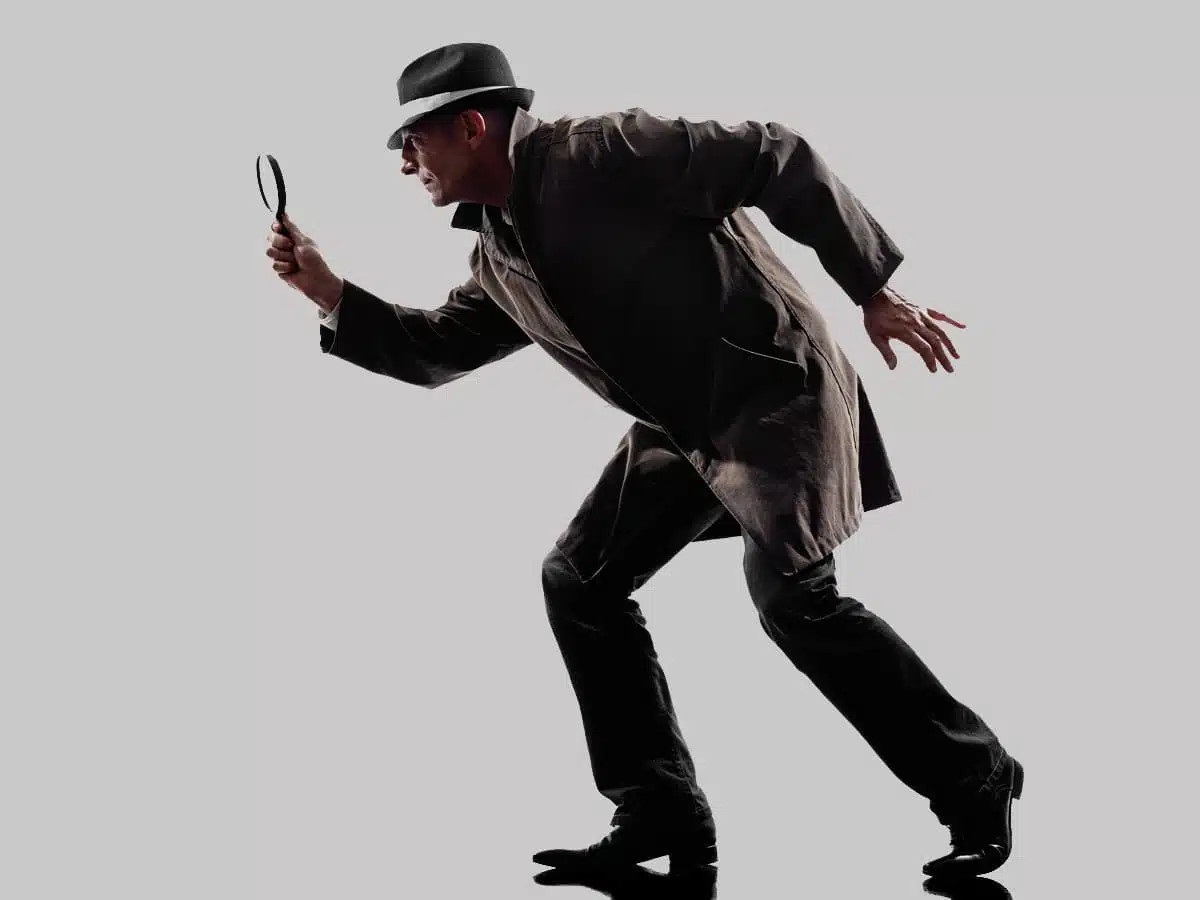
The looking glass is the primary symbol of the classic detective, and this symbol has carried over into other formats. Now the camera (both video and still) as well as the microscope have become tools of the trade for the detective. Since the detective is synonymous with the spy, any special spying equipment also applies.

Often the detective is pictured in a dimly lit room or in a dark alley with smoke or fog swirling about. The truth is hidden in the shadow and covered in smoke screens. The detective navigates through these to find the answer.

Detectives were historically pictured wearing hats to help disguise their identities as they poked around for clues. Take note in the movies when a character puts on a hat to go spy on someone. This is the detective archetype entering the scene. Trench coats are a relatively common occurrence too and are another way to disguise one’s identity.

Famous Detectives

Sherlock Holmes is of course the most famous of all detectives, but TV shows and movies focused around the detective abound in today’s media. ABC’s Secrets and Lies has Juliet Lewis, trench coat and all, embodying the obsessive investigator. FX’s Justified, Fox’s Bones, CBS’s CSI, NBC’s Law & Order and ABC’s Castle are just a few more examples. Documentary investigative reporting such as the show 48 Hours turns viewers into detectives solving crimes alongside real-life professionals. Even Ironman and the Incredible Hulk in Avengers: The Age of Ultron are nearly as busy investigating as they are innovating. We just can’t seem to get enough. This shows that we don’t have to be a criminal investigator for a living to feel an affinity with the power of the detective.


Want to know what archetypes are yours?
Schedule an Archetypal Consulting Session
and Find Out!